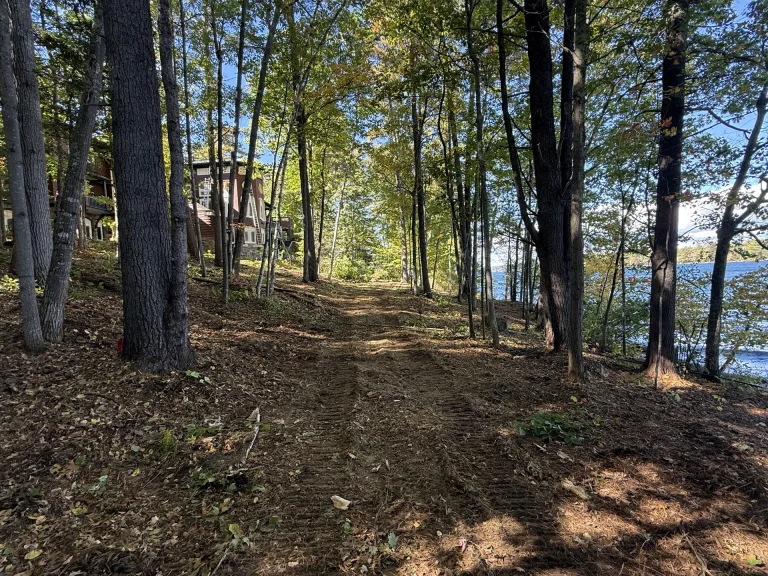
Every fall, a few of our neighbors walk out to the back of their land and find something odd. A tree hanging over the path. A wall of thorns. A pile of old stones that seems to come out of nowhere. It can feel a little spooky. But almost everything you find on overgrown land has a plain answer.
Here’s the short version. Walk your land in October, while the leaves are down and before snow covers the ground. Look for five things: dead or leaning trees, thorny tangles, old stone walls, stumps and holes, and wet spots. Mark what you find. Then decide what to tackle before winter.
This guide walks through each one, what it really is, and what to do about it. It’s written for owners in Alton, Gilford, New Durham, Barnstead and the rest of the Lake Winnipesaukee area.

Why Is October the Best Time to Walk Your Land?
In summer, the woods are a green wall. You can stand ten feet from a fallen tree and never see it.
Fall changes that. Once most of the leaves drop, you can see farther into the woods than at any other time of year. Brush that hid the ground in July is thin and brown. You can see the shape of the land, where it dips, and where it stays wet.
The ground is also still workable. Once it freezes and the snow comes, most of this is covered until spring.
A few tips before you head out:
- Pick a dry day with good light.
- Wear sturdy boots, long pants and gloves.
- Wear bright orange. Fall is hunting season in New Hampshire.
- Bring your phone for photos and a roll of bright flagging tape.
Now, here are the five “spooky” things you’re most likely to find.
1. Why Is That Dead Tree Leaning Over the Trail?
What it looks like: A gray tree with no leaves and loose bark, tipped toward your path. Or a tree that is hung up in another tree and hasn’t hit the ground yet.
What it really is: A hazard tree. A dead tree can’t bend the way a living one does. It gets weaker every year as it rots.
Why it matters before winter: Ice and heavy snow add weight to branches, and trees with dead or rotting wood are more likely to break. If a dead tree leans over a trail you use for walking, snowshoeing or riding, winter is when it’s most likely to come down.
What to do: Stay out from under it. Don’t try to cut a leaning or hung-up tree yourself. These trees can move in ways you don’t expect once the saw goes in. Tie flagging tape on something nearby that is safe to reach, and take a photo from a distance. Then have it looked at. You can read about how we handle this on our tree removal and chipping page.
2. What Is That Thorny Wall at the Edge of the Woods?
What it looks like: A tangle you can’t walk through. Vines wrapped around young trees. Thorny shrubs that still have green leaves after almost everything else has turned brown.
What it really is: Often, invasive plants. Two of the most common in our area are Oriental bittersweet and buckthorn.
- Oriental bittersweet is a climbing vine. In fall, its berries turn yellow and orange, which makes it easy to spot. UNH Extension says the extra weight of the vine makes trees more likely to break in a storm.
- Buckthorn is a shrub or small tree. It tends to hold its green leaves later in the fall than many native plants. That’s why late fall is the best time to find it.
Both are on the New Hampshire prohibited invasive species list. That means you should not move the live plants around or replant them.
Why it matters: These plants spread. A tangle along one edge this year can be a bigger tangle in a few years. Bittersweet can also grow back from pieces of root, so one cutting is rarely the end of it.

What to do: Don’t cut bittersweet berries for fall wreaths or decorations. UNH Extension notes this can help spread the plant. Take photos of where the tangle starts and stops. Thick brush is slow work by hand. Our field mowing, brush cutting and forestry mulching work handles the heavy stuff, and we can talk with you about how to keep it from coming back.
3. Where Did That Old Stone Wall Come From?
What it looks like: A low, gray line of stones running through the trees. In summer, leaves and ferns hide it. In late fall, it’s easy to see.
What it really is: Many old walls in New Hampshire were built when the land was open farm fields. Some walls mark the edge of an old field. Some line up with property lines.
Why it matters: A wall is a clue, not proof. It might be your line, your neighbor’s line, or neither. If you plan to clear near it, you want to know which side you’re on before any work starts.
What to do: Walk the length of the wall and take photos. Look for any survey pins or markers nearby. If you’re not sure where your line is, talk to a licensed land surveyor before you clear close to it. And if you like the wall, say so. Flag it so it’s part of the job from the start.
4. What Is Hiding Under the Brush?
What it looks like: You nearly twist an ankle on a cut stump, a hole, or a rock you never knew was there.
What it really is: Most overgrown land has a history. Old cutting leaves stumps behind. Animals dig holes. Rocks and old debris get buried in leaves. Brush grows up around all of it.
Why it matters before winter: Once snow falls, these things disappear. A stump you can step around in October is easy to hit in January with a snowblower, a plow, a snowmobile or an ATV.

What to do: Mark them now. Use tall stakes or flagging tape that will stick up above the snow. If stumps are in an area you want to mow, walk or use, grinding is a solid fix. We usually grind 6 to 12 inches below the ground, depending on how you’ll use the area. You can read more on our stump removal and grinding page.
5. Why Is That One Corner Always Soggy?
What it looks like: A low spot where water sits after rain. Mud that never quite dries. Moss and ferns where you’d expect grass.
What it really is: It could be a few different things. Water from a roof, a driveway or a hill above may be draining to that low area and pooling. Or it could be a natural wet area. Some wet areas are wetlands, and New Hampshire has rules about working in them.
Why it matters before winter: Fall is the easiest time to see where the water goes. In spring, melting snow can make a wet patch much worse. Water that sits near a house, shed or driveway can cause bigger problems over time.
What to do: Don’t start digging on your own. Take photos after a rain and note where the water seems to come from. Then have someone look at it. Along with clearing, we do light excavation and drainage work. We can walk it with you and talk about whether it’s a drainage fix or something that needs to stay as it is.
What Should You Do Before the Snow Flies?
Here’s a simple list to finish your fall walk-through:
- Flag it. Use one color for hazards (dead trees, holes, stumps) and another for things to keep (good trees, stone walls).
- Photo it. Take a few pictures of each thing you flagged. Your phone can save the location.
- Sketch it. Draw a rough map of your land and mark where each flag is. It doesn’t need to be pretty.
- Fix the risky stuff first. Start with dead trees over trails and stumps where you plow or ride.
- Plan the rest. Brush and tangles can wait for the right time. Get them on the calendar.
Do You Have to Clear Everything?
No. Clearing doesn’t have to mean a bare lot. The goal is land that feels open, safe and usable, with the trees and features you like still in place. We can take out hazard trees, open up a tangle, and grind stumps without clear-cutting. You keep the good trees, the stone wall and the feel of the woods. If you want a bigger area opened up, our lot and land clearing work covers that. If you want a better look at the lake, see our view clearing and selective thinning page.
Want a Second Set of Eyes on Your Land?
NH Forestry Services is a local, family-owned company based in Alton. We work across the Lakes Region, including Alton, Gilford, New Durham and Barnstead. We’re fully licensed and insured, and we offer senior and veteran discounts.
If your fall walk turned up something you’re not sure about, give us a call at (603) 312-7282, Monday through Friday, 7am to 5pm. Or send us a message. Estimates are free.
What did you find on your land this fall?